Services — 07
Branding Agency in the UAE
VDESIGNU is a branding agency that works from Dubai, building brand identities for businesses across the UAE and the Gulf: positioning, naming, logo design, packaging and the guidelines that hold it together. Every identity we make is drawn to work in Arabic and English from the first sketch.
Start a projectWhat you get
Positioning and messaging
A short, usable statement of who you're for, who you're chosen over and why, plus the key messages your website and sales team will repeat.
Naming
Name options checked for meaning and sound in Arabic and English, available domains and handles, and an early trademark search before anyone gets attached.
Logo and identity system
Logo, colour, typography, graphic elements and photography direction, designed as a system that still looks right on a favicon and a building.
Bilingual Arabic and English logotypes
Arabic and Latin wordmarks drawn together to share weight and character, with lockups for every common placement.
Packaging design
Front-of-pack built for recognition at a glance, back-of-pack laid out for Arabic and English legal copy, delivered as print-ready dielines.
Brand guidelines
The document your next designer, printer or agency opens: usage rules, colour values for screen and print, type pairings and tone of voice in both languages.
Rollout to web and social
Website design, social templates, stationery and signage files, so the new identity shows up everywhere at once rather than piece by piece.
The detail
What does a branding agency do for a UAE business?
A branding agency decides how your business should be understood, then makes that visible everywhere a customer meets it. For us that means positioning first, a name if you need one, then logo and identity, packaging, and guidelines your team can follow. In the UAE nearly all of it has to work in Arabic and English.
The deliverable people remember is the logo. The one that keeps a brand looking like itself two years later is the guideline document your next designer opens. Both get the same care here.
Why we write the positioning before we draw anything
Picture a founder opening a coffee roastery who sends us three logos she admires. All three are thin black wordmarks on white. So, when we check, are the logos of most of the roasters she’ll compete with. The brief quietly changes from “make it like these” to “make sure nobody confuses us with these”.
That’s what positioning work catches. Before any sketching we write one page: who you’re for, what they’d choose if you didn’t exist, and the impression you want to leave after one visit. It decides type, colour and tone. Without it, a logo review turns into a vote on favourite colours.
If you need a name, this is where it happens. We check every candidate for meaning, sound and spelling in both languages; our Arabic brand name checker is a quick first pass, and native speakers have the final word. The Arabic-English transliteration tool helps test how customers might type the name into a search bar.
Arabic and English logotypes, drawn as a pair
A bilingual logotype works when the Arabic and Latin wordmarks are designed together, sharing weight, rhythm and personality. The common failure is a custom English wordmark sitting beside Arabic typed in a stock font. Arabic is a connected script with no capital letters and different proportions, so matching it to Latin takes drawing.
Some specifics we work through on every bilingual mark:
- Letter shapes change with position. Most Arabic letters have different forms at the start, middle and end of a word, so the same name can look balanced or awkward depending on its letters.
- Vertical proportions differ. Tall strokes such as alif and lam and deep descenders mean an Arabic word scaled to match English cap height can look cramped. We balance the two by eye, not by numbers.
- Style carries meaning. A geometric Kufi reads as modern and architectural; a Naskh-based form feels familiar and easy to read. The choice should follow the positioning.
- Placement decides the lead script. A shopfront, an Instagram avatar and a product label may each need a different language in the dominant position, so we make lockups for each.
Packaging that works at arm’s length
Packaging has one job at the shelf: make the product recognisable from a step away, before anyone reads a word. Then it has to carry ingredients, warnings and legal copy in two languages without losing that first impression. We design the front for the glance and the back for the rules.
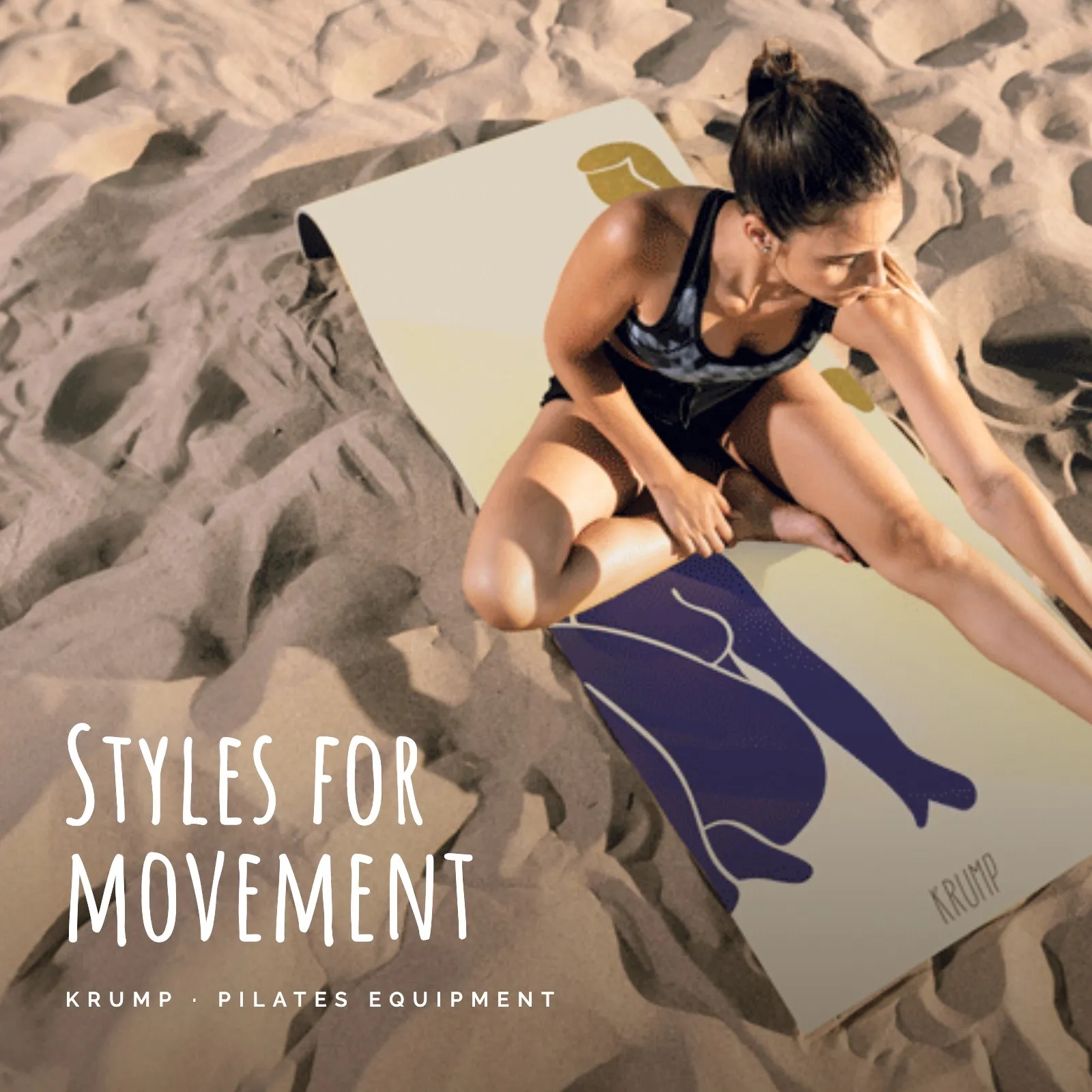
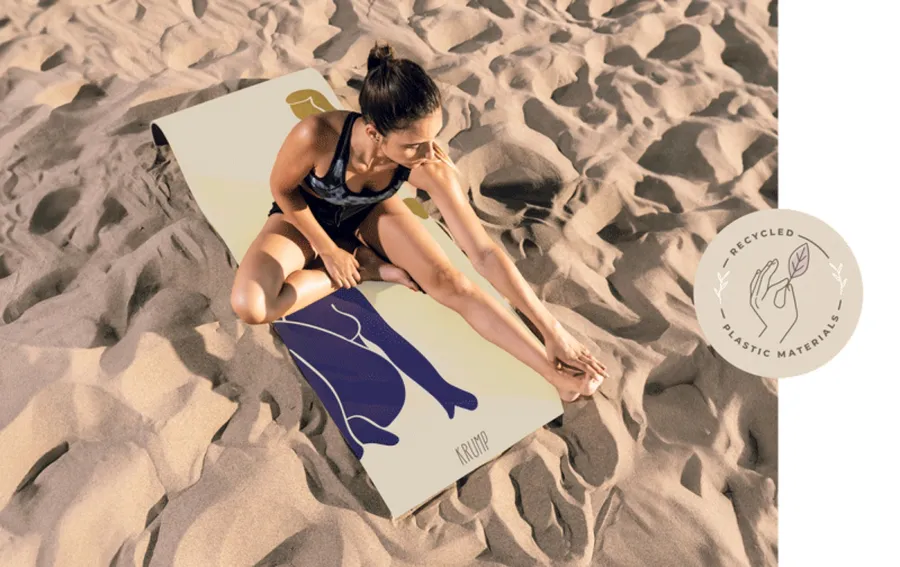
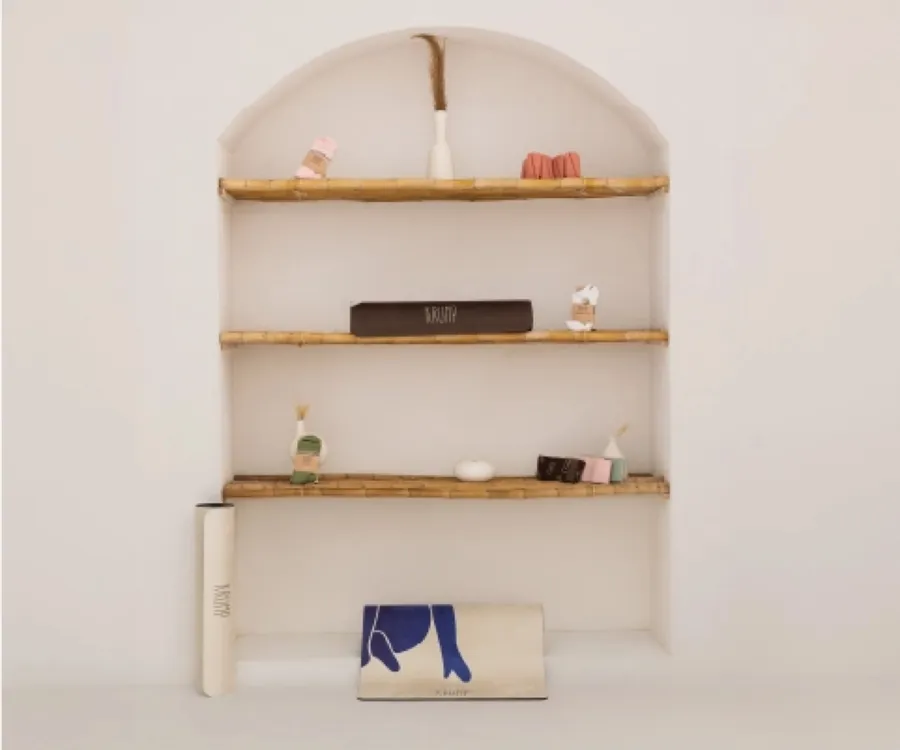
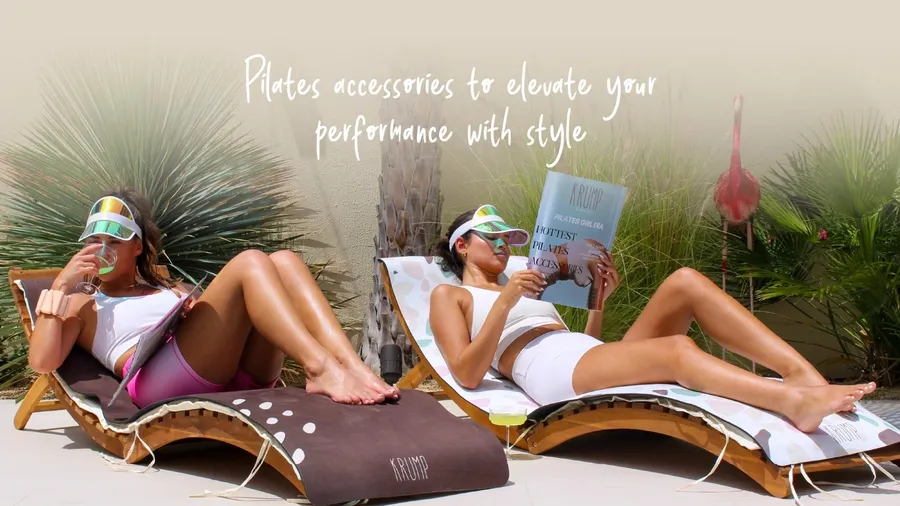
For Furusia’s packaging, that first job was the whole brief: make the product unmistakable at arm’s length. For Krump we went further, from logo and identity through packaging to the e-commerce site, so the same attitude carries from shelf to checkout.
If your product is food, the Gulf standard for prepackaged food labels (GSO 9) requires Arabic on the label, with any other language alongside it rather than instead of it. We lay out both languages in the dieline from the first draft, which saves a painful redesign when the printer or importer flags it.
When to rebrand, and when to leave it alone
Rebrand when the business has outgrown its identity: a new market, a merger, a different customer, or a name that limits where you can go. If customers already recognise your colour or symbol and the real problem is inconsistent execution, a refresh that keeps those assets is usually the better buy, and we’ll tell you so.
A new name or mark also needs legal clearance before it goes public. In the UAE, trademarks are registered with the Ministry of Economy and Tourism under Federal Decree-Law No. 36 of 2021, which also recognises colour marks and three-dimensional marks such as packaging shapes. In Saudi Arabia, filings go to the Saudi Authority for Intellectual Property. We run preliminary searches; a trademark attorney should do the clearance and filing.
A rebrand that changes your domain is also a website migration. Plan the redirects with the same care as the logo, or the old name’s search traffic disappears with it.
From guidelines to your website, shopfront and social
An identity only works once it’s used consistently, so the handover matters as much as the design. Our guidelines cover logo use in both scripts, clear space, colour values for screen and print, Arabic and English type pairings, photography direction, tone of voice, and ready-made templates for the formats your team uses most.
Then comes rollout. The website is usually the biggest single surface, and our website design and development service builds it on the new identity in both languages. Social templates, stationery and signage files follow, so customers see the new brand everywhere at once.
We work from Dubai with clients across the Gulf, remotely outside Dubai. For city-specific detail, see our branding agency page for Dubai, brand identity design in Riyadh and branding for companies in Doha.
Selected work
How we work
- 01
Discovery and audit
Interviews with founders and staff, a look at your competitors' identities, and a review of what you already have that customers recognise.
- 02
Positioning
One page that defines the audience, the alternative you're chosen over, and the impression to leave. Every design decision is judged against it.
- 03
Identity routes
Two or three distinct directions shown in use (shopfront, packaging, phone screen) rather than as logos floating on white.
- 04
Refinement and Arabic pairing
The chosen route is drawn out in both scripts, tested at small sizes and on real materials, and adjusted until both versions feel equal.
- 05
Guidelines and handover
Final files in every format, the guidelines document, and templates for the places your team will use the brand most.
Questions
What does a branding agency do?
A branding agency defines how your business should be perceived and makes it visible. That covers positioning, naming when needed, logo and identity design, packaging, guidelines and rollout to your website and social channels. For UAE businesses it usually includes Arabic and English versions.
How much does branding cost in the UAE?
It depends on scope: a logo refresh, a full identity system, naming, packaging across a product range, and whether Arabic logotypes are drawn from scratch. We scope after a free call about your business and what the brand has to do, so the proposal fits the job.
How long does a brand identity project take?
A full identity, from discovery to guidelines, usually takes a couple of months. Naming and packaging add time, mostly for checks: trademark searches, printer proofs and regulatory copy. Your feedback rounds are the other big variable.
Can you design a logo in both Arabic and English?
Yes, and we design them together. The Arabic and English wordmarks are drawn to share stroke weight, proportion and personality, so neither looks like a translation added later. We also make lockups for horizontal, stacked and icon-only use.
What's the difference between a logo and a brand identity?
A logo is one mark. A brand identity is the whole system around it: colours, typography, imagery, layout rules, tone of voice and how they combine on packaging, signage and screens. A strong identity is still recognisable when the logo is cropped out.
Should we rebrand or refresh?
Refresh if customers already recognise your colours or mark and the problem is execution. Rebrand when the business has changed: a new market, a merger, a new audience, or a name that limits growth. We'll recommend one after the audit, and sometimes it's the smaller job.
Do you design packaging for products sold in the GCC?
Yes. We design the front for recognition and lay out the back for Arabic and English text. For prepackaged food, the Gulf labelling standard GSO 9 requires Arabic on the label, so we plan both languages into the dieline from the start.
Do you register trademarks?
No. We run preliminary searches during naming and identity work, then recommend that a trademark attorney clears and files the mark. In the UAE that filing goes to the Ministry of Economy and Tourism; in Saudi Arabia, to the Saudi Authority for Intellectual Property.
Branding by city
UAE Branding in Dubai Branding in Abu Dhabi Branding in Sharjah Branding in Ajman Branding in Ras Al Khaimah Branding in Fujairah Branding in Umm Al Quwain
Saudi Arabia Branding in Riyadh Branding in Jeddah Branding in Dammam Branding in Al Khobar Branding in Medina Branding in Mecca
Qatar Branding in Doha
Kuwait Branding in Kuwait City
Oman Branding in Muscat
Bahrain Branding in Manama
United States Branding in Chicago
Australia Branding in Melbourne